20% Off for New Inquiries – Today Only!
20% Off for New Inquiries – Today Only!
Baby clothing defects can turn a well-designed product into a costly quality problem. A garment may use the correct fabric and follow the approved design, yet still fail inspection because of uneven stitching, incorrect measurements, stains, fabric damage, or poorly attached trims.
For brands, these problems can lead to rework, delayed shipments, rejected goods, and customer complaints.
For a baby clothing manufacturer, quality control is not only about checking finished garments. It is about understanding where defects come from and preventing the same problem from appearing across hundreds or thousands of pieces.
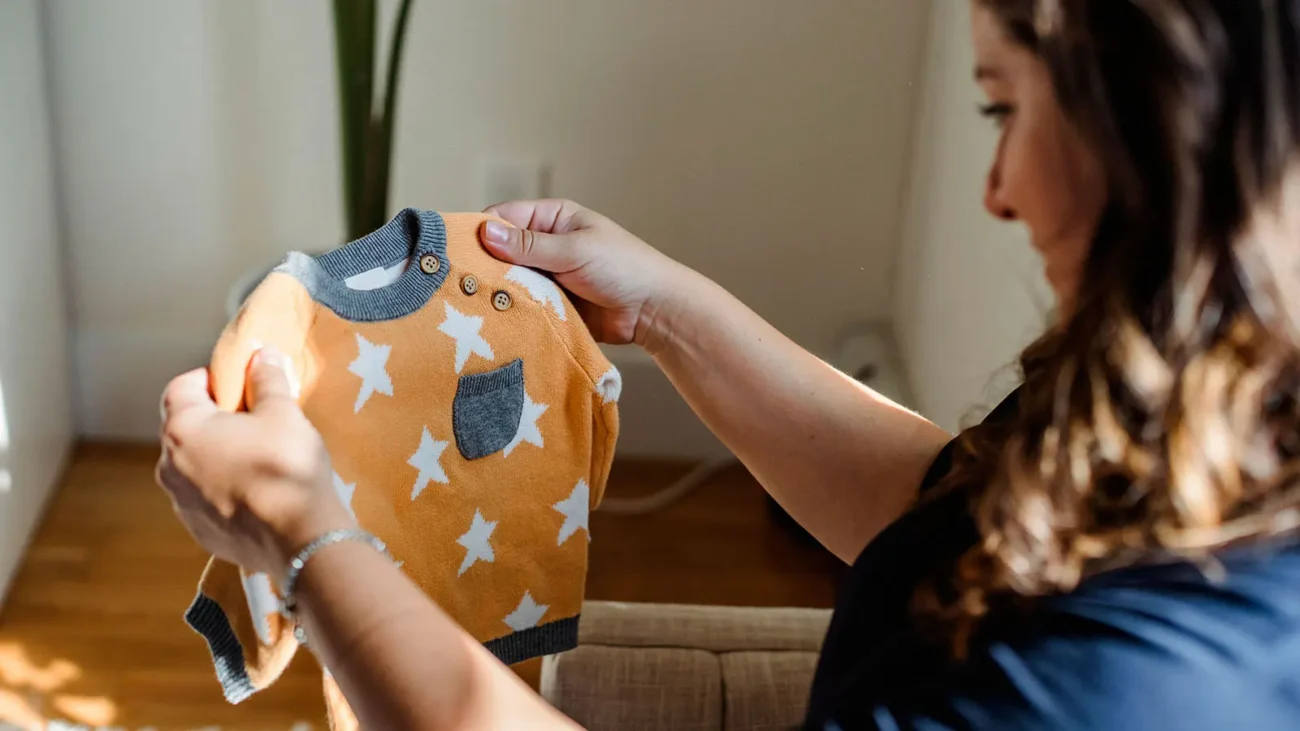
Most baby clothing defects have a specific cause.
Some start with the fabric. Others come from cutting, sewing, printing, finishing, or packing. In some cases, the production team has the correct specifications but does not check the work consistently.
The earlier a problem is found, the easier it is to correct.
A stitching problem discovered on the first few garments may take minutes to fix. The same problem discovered after several thousand garments have been completed can require extensive rework.
This is why experienced factories focus on prevention rather than relying entirely on final inspection.
Stitching is one of the easiest quality problems to see.
A seam may have uneven stitches, skipped stitches, loose tension, or inconsistent thread density. These problems can make a garment look poorly manufactured even when the fabric and design are correct.
Common causes include incorrect machine settings, worn needles, poor thread tension, unsuitable thread, or inconsistent sewing technique.
Stretch fabrics can be particularly sensitive to sewing settings because excessive tension may distort the seam.
A baby clothing factory should maintain sewing machines regularly and check needles, thread tension, and machine settings.
Operators should also monitor important seams during production instead of waiting until the garments reach final inspection.
For baby garments, neat stitching is important not only for appearance but also for durability during repeated washing and wearing.
Measurement errors are especially noticeable in baby clothing because the garments themselves are relatively small.
A difference of one or two centimeters can have a significant effect on the fit of a bodysuit, romper, or pair of baby pants.
Problems may start with the pattern, fabric relaxation, cutting, or sewing.
For example, if knitted fabric has not been properly relaxed before cutting, the finished garment may not match the expected measurements.
Sewing tension can also affect the dimensions of stretchy fabrics.
A brand normally approves a sample based on a measurement chart.
If the bulk garments are consistently outside the agreed tolerance, the factory has not reproduced the approved product accurately.
A reliable baby clothing manufacturer should therefore treat measurement control as part of the production process rather than something checked only at the end.
This is also why consistent baby clothing manufacturing requires clear measurement standards from sample development through bulk production.
Stains are among the most visible baby clothing defects.
Oil from sewing machines, dirt from handling, ink, dye marks, and water stains can all appear during manufacturing.
White, cream, beige, and pastel baby clothing can make small stains particularly obvious.
Some marks may be removed during finishing, but repeated stain removal is not a substitute for solving the original problem.
Clean production areas, properly maintained machinery, and careful garment handling can reduce contamination.
When the same type of stain appears repeatedly, the factory should identify its source instead of simply cleaning each garment individually.
For a baby clothing factory, this approach is more effective than relying on additional finishing work after production.

Loose threads are common around seams, hems, labels, and decorative stitching.
A few short thread ends may be normal during production, but excessive loose threads make garments look unfinished.
Inspectors should pay attention to:
For baby clothing manufacturing, finishing details matter because parents often examine baby garments closely before purchasing.
Thread trimming is simple, but if hundreds of finished garments require additional trimming, the factory loses both time and labor.
A professional baby clothing manufacturer should therefore include thread trimming as part of normal finishing rather than treating it as emergency rework.
Some baby clothing defects exist before the garment reaches the sewing line.
Knitted fabrics can contain holes, dropped stitches, yarn problems, or uneven surfaces. Woven fabrics may have broken yarns or weaving defects.
If a fabric defect is discovered after cutting, multiple garment panels may already be affected.
This can create both material waste and production delays.
A baby clothing factory should therefore pay attention to incoming fabric quality before bulk cutting.
For a baby clothing factory, early fabric inspection can prevent a small material problem from becoming a large production loss.
Not every defect is immediately visible. Some become easier to notice when the fabric is stretched or when several panels are placed next to each other.
This is particularly important for jersey, rib, and interlock fabrics commonly used in baby garments.
Color consistency can become difficult when an order uses several fabric lots.
Two fabrics produced from the same color reference may still appear slightly different because of dye lots, fabric batches, or production conditions.
Color differences can be especially noticeable when several products are sold as a coordinated collection.
For example, if a brand sells a matching baby T-shirt and pants, customers expect the colors to look consistent.
For larger baby clothing bulk orders, factories should identify fabric lots and maintain a clear approved color reference.
Lighting should also be considered when evaluating color because the same shade can look different under different light sources.
A baby apparel manufacturer should make sure color references are clear before bulk production begins, especially when several garments need to match.
Labels are a small component of the garment, but incorrect labeling can create unnecessary problems for brands.
A garment may have the wrong size label, incorrect fiber information, or care instructions that do not match the approved specification.
Typical issues include:
If a physical garment is size 12M but carries the wrong size label, the product can be incorrectly stocked, packed, or sold.
Labels should therefore be treated as part of the product specification rather than a final decoration.
For baby clothing manufacturing, label information should be confirmed before production so that the same error does not spread across an entire order.
Prints and embroidery can have a major effect on the appearance of baby clothing.
A graphic may be too high, too low, too far to one side, or slightly off-center.
Operators may rely on visual judgment when the production specification does not provide a clear reference.
This becomes particularly noticeable with centered chest prints, logos, or graphics that need to align with seams.
A tech pack should provide clear placement measurements.
Instead of simply specifying “center chest,” the specification can define the distance from the neckline or shoulder point.
This gives the baby apparel manufacturer a measurable reference and makes production more consistent.
Clear placement specifications are also an important part of professional baby clothing manufacturing, especially when the same design is produced in multiple sizes.
Baby garments often include snaps, buttons, zippers, elastic, labels, and other components.
These parts require careful control because they can affect appearance, durability, and product safety.
Factories should watch for:
A trim may look secure during a quick visual inspection but still require additional testing depending on the product and target market.
A responsible baby apparel manufacturer should also understand how trim selection and attachment affect the finished product.
The production team should confirm these requirements with the baby apparel manufacturer before bulk production begins.
For children’s products sold in the United States, brands should understand the applicable safety requirements.
The U.S. Consumer Product Safety Commission (CPSC) provides official information about children’s product safety and compliance.
A garment can have good construction and still arrive looking poorly prepared.
Wrinkles, poor pressing, incorrect folding, damaged packaging, mixed sizes, or incorrect stickers can all create problems before the product reaches the customer.
Baby clothing is often sold online or displayed in retail environments where presentation influences the customer’s first impression.
A garment that arrives heavily wrinkled or incorrectly packed may require additional work before it can be sold.
Finishing and packing should therefore be considered part of overall product quality.
Not every defect has the same financial impact.
A loose thread may take seconds to correct.
A wrong label can require sorting and relabeling.
A fabric defect discovered after cutting can result in considerable material waste.
A measurement problem affecting an entire size range can be even more expensive because hundreds or thousands of garments may require rework.
For most baby clothing projects, brands should pay particular attention to:
These areas can affect a large part of an order when problems are not identified early.
Before placing a larger order, brands can ask practical questions:
The answers can tell a brand a great deal about the factory’s actual quality system.
A factory may have modern equipment and an attractive product catalog, but bulk production depends on whether its quality standards can be maintained consistently.
Choosing the right baby clothing manufacturer is therefore about more than price, MOQ, or production capacity.
The factory should be able to identify problems early and keep the approved quality level consistent throughout production.
Preventing baby clothing defects starts with clear communication between the brand and factory.
A detailed tech pack, approved sample, measurement chart, fabric specification, trim list, and packing instructions give the production team a clear reference.
For brands developing new products, custom baby clothing manufacturing allows these details to be reviewed before bulk production.
You can also explore baby clothing manufacturing insights for practical information about materials, development, and production.
Before selecting a supplier, see the baby clothing factory and manufacturing experience.
For broader apparel programs, apparel manufacturing solutions may also be relevant.
Brands developing children’s collections can explore kids clothing manufacturing, while baby accessory programs can be supported through baby accessories manufacturing.
For wider sourcing and supply-chain coordination, Joyo Roy provides additional manufacturing and export resources.
Baby clothing defects are easier and cheaper to prevent than to fix after shipment.
The most common problems include stitching defects, incorrect measurements, stains, loose threads, fabric damage, color variation, labeling errors, print misalignment, trim problems, and poor finishing.
But quality control is not simply about creating a long inspection checklist.
The real goal is to make sure the approved design is reproduced consistently during bulk production.
For brands, the important question is not simply whether a factory can make the sample.
It is whether the factory can make the same quality product repeatedly, across different sizes, fabric lots, production runs, and order quantities.
The right baby clothing factory should be able to maintain this consistency from the first production piece to the final shipment.
That is what turns a good sample into a reliable bulk order.

 scan wechat qrcode