20% Off for New Inquiries – Today Only!
20% Off for New Inquiries – Today Only!
Baby clothing shrinkage is a problem that may not become obvious until a garment has already reached the customer.
A sample can look and fit perfectly when it leaves the factory. After the first wash, the body may become shorter, sleeves may tighten, or the overall fit may change.
For baby clothes, even a small dimensional change can be noticeable.
This is why an experienced baby clothing manufacturer considers shrinkage during fabric selection and sample development instead of waiting until after bulk production.
Shrinkage is mainly related to how fibers, yarns, and fabrics respond to moisture, heat, and mechanical movement.
During knitting, weaving, dyeing, and finishing, fabric can hold internal tension. Washing can release some of that tension, causing the material to relax.
The amount of fabric shrinkage depends on the fiber, fabric construction, finishing process, and washing conditions.
Cotton is widely used for baby garments because of its softness and breathability.
However, cotton can change dimension after washing.
The result depends on:
Organic cotton is not automatically shrink-proof. If the fabric has not been properly stabilized, it can still show noticeable dimensional change.
Many baby garments use jersey, rib, and interlock fabrics.
Their loop structure provides stretch and comfort, but it also allows the fabric to relax after washing.
A baby clothing factory therefore should not assume that every cotton fabric will have the same shrinkage rate.
Cotton-polyester and other blended fabrics can behave differently from 100% cotton.
Fiber composition gives useful information, but it does not tell a manufacturer exactly how much a particular fabric will shrink.
Actual testing is more reliable.
Baby clothing shrinkage becomes a garment problem when fabric changes dimension after production.
Consider a baby bodysuit.
If the body becomes shorter after washing, the garment may start pulling between the shoulders and crotch.
A T-shirt can become shorter, sleeves can lose length, and waist or leg openings can change.
Because baby garments are relatively small, even a few centimeters can affect fit.
A brand may approve a garment according to a specific measurement chart.
If the garment changes significantly after washing, post-wash measurements may fall outside the agreed tolerance.
That is why baby clothing manufacturing should consider dimensional stability before the production sample is approved.
Parents expect baby clothes to handle normal washing.
If a garment becomes noticeably smaller after the first wash, the customer simply sees a product that no longer fits as expected.
For brands, controlling baby clothing shrinkage is therefore part of product quality.
The best time to deal with baby clothing shrinkage is before bulk production.
Once thousands of garments have been cut and sewn, changing the fabric or pattern becomes much more expensive.
The factory can request information such as:
Supplier information provides a useful starting point, but important products should still be tested.
A baby clothing manufacturer can test the fabric before making the final production sample.
The material is measured before washing and again afterward.
This gives the development team a clearer idea of how the fabric will behave in actual use.
For larger orders, fabric performance should be confirmed before the main cutting process begins.
If testing shows more fabric shrinkage than expected, the pattern or fabric specification can still be adjusted.
Shrinkage is usually expressed as a percentage.
Suppose a fabric sample is 100 cm long before washing and 96 cm afterward.
The calculation is:
(100 − 96) ÷ 100 × 100 = 4% shrinkage
The same method can be used for width.
If a fabric is 150 cm wide before washing and 147 cm afterward:
(150 − 147) ÷ 150 × 100 = 2% shrinkage
Fabric does not always shrink equally in both directions.
A material may lose more length than width, which matters when developing garment patterns.
For knitted baby clothing, checking both directions is especially important.
For brands that require formal textile testing, AATCC publishes widely used textile testing methods covering areas such as dimensional change, colorfastness, and laundering performance.
Recognized testing methods provide a more consistent basis for comparing fabric and garment performance.
There is no single solution for every fabric.
The right approach depends on the fiber, fabric structure, finishing process, and intended use.
A good way to reduce baby clothing shrinkage is to select a fabric with suitable dimensional stability from the beginning.
For a baby clothing manufacturer, this is usually more practical than trying to correct a poorly performing fabric after production has started.
Fabric finishing can influence dimensional stability.
Depending on the material, suppliers may use finishing processes designed to stabilize the fabric.
The exact process depends on the fabric construction.
Some fabrics can be treated before cutting to reduce uncontrolled shrinkage.
The goal is not necessarily zero shrinkage.
The more important objective is making the remaining shrinkage predictable.
Pattern adjustment can be based on actual test results.
For example, if testing shows that a fabric consistently loses some body length after washing, the production pattern can be adjusted accordingly.
This is safer than adding an arbitrary amount to every measurement.
Washing conditions affect fabric shrinkage.
Hot water, strong agitation, and high dryer temperatures can produce different results from cooler and gentler washing.
The factory therefore needs to understand the care instructions intended for the final product.
Testing the fabric is important, but it is not always enough.
Once the material becomes a finished garment, seams, stitches, elastic, and trims can also affect dimensional change.
Thread tension and seam construction can influence how the garment responds after washing.
If the fabric relaxes differently from the seam structure, the garment may not sit as intended.
Necklines, cuffs, waistbands, and leg openings deserve particular attention.
Rib fabrics and elastic components have their own recovery characteristics, so dimensional changes in these areas can affect fit.
Large prints or embroidery can also influence how a finished garment behaves.
The finished product should therefore be evaluated rather than relying only on a fabric test.
Testing before production is only the first step.
If baby clothing shrinkage is an important specification, fabric should be checked before large quantities are cut.
This can prevent thousands of garments from being produced from material that does not meet the expected requirements.
Large orders may use fabric from several production lots.
Even when composition and weight are the same, finishing differences can sometimes create different results.
For a baby clothing factory, keeping fabric lots identifiable makes later investigation easier.
Finished garments can be measured against the approved specifications.
The quality team may check:
The exact measurements depend on the garment.
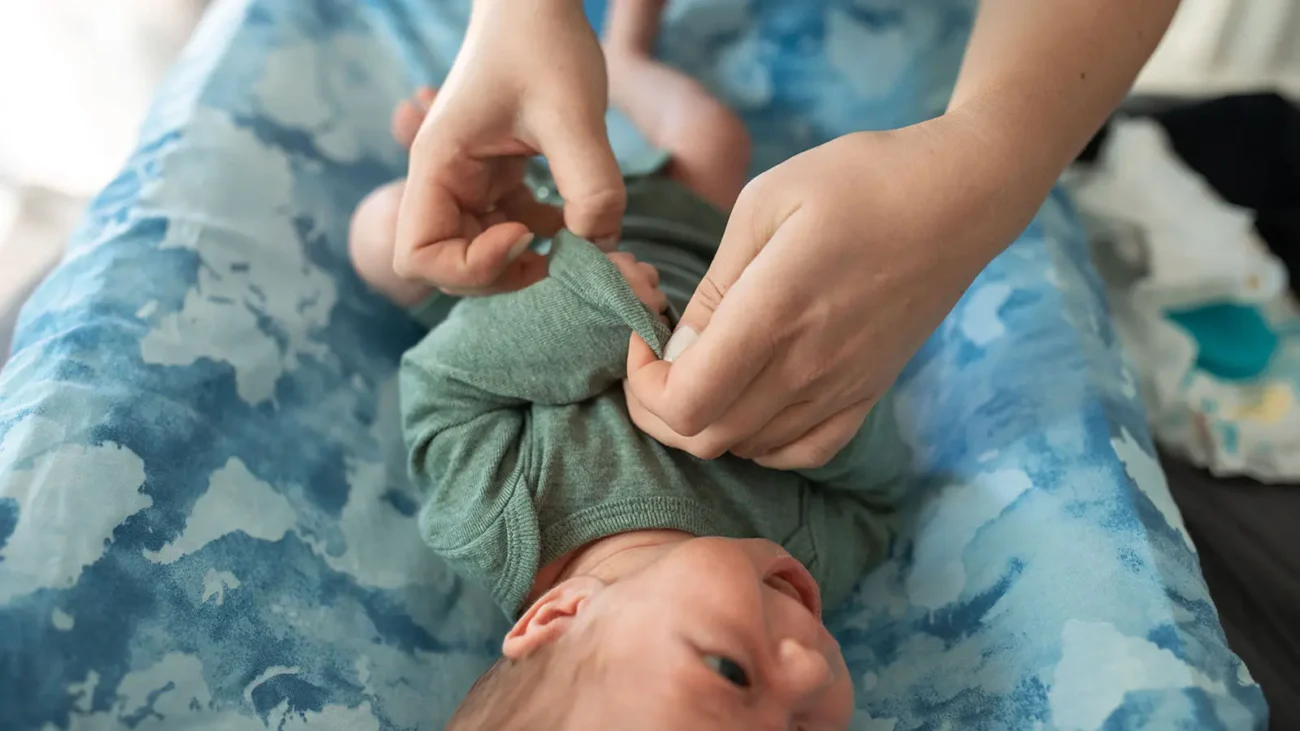
Shrinkage should be discussed before the purchase order is finalized.
A brand can ask a baby apparel manufacturer:
The answers can reveal how seriously a factory approaches dimensional stability.
For products sold in different markets, brands should also consider applicable technical and safety standards.
ASTM International develops voluntary consensus standards covering a wide range of materials, products, and manufacturing applications.
For brands selling children’s products in the United States, the U.S. Consumer Product Safety Commission (CPSC) provides official information about children’s product safety requirements and compliance.
A practical baby clothing shrinkage testing process can follow a simple sequence:
This gives the brand a clearer idea of what customers will receive after normal washing.
There is no universal percentage that works for every garment.
A 2% change may be acceptable for a loose-fitting T-shirt but more noticeable on a fitted bodysuit.
The acceptable result depends on:
The important point is to agree on acceptable tolerances before production.
A manufacturer should not decide after production that a certain shrinkage level is simply “normal.”
For brands developing custom baby garments, baby clothing shrinkage should be discussed while the product is still being developed.
Custom baby clothing manufacturing gives brands the opportunity to review fabric, pattern, fit, and construction before committing to bulk production.
You can also explore baby clothing manufacturing insights for more practical information about materials and production.
Before selecting a supplier, learn more about the baby clothing factory and manufacturing experience.
For broader apparel programs, apparel manufacturing solutions may also be relevant.
Brands developing children’s collections can explore kids clothing manufacturing, while accessory programs can be supported through baby accessories manufacturing.
For wider sourcing and supply-chain coordination, Joyo Roy provides additional manufacturing and export resources.
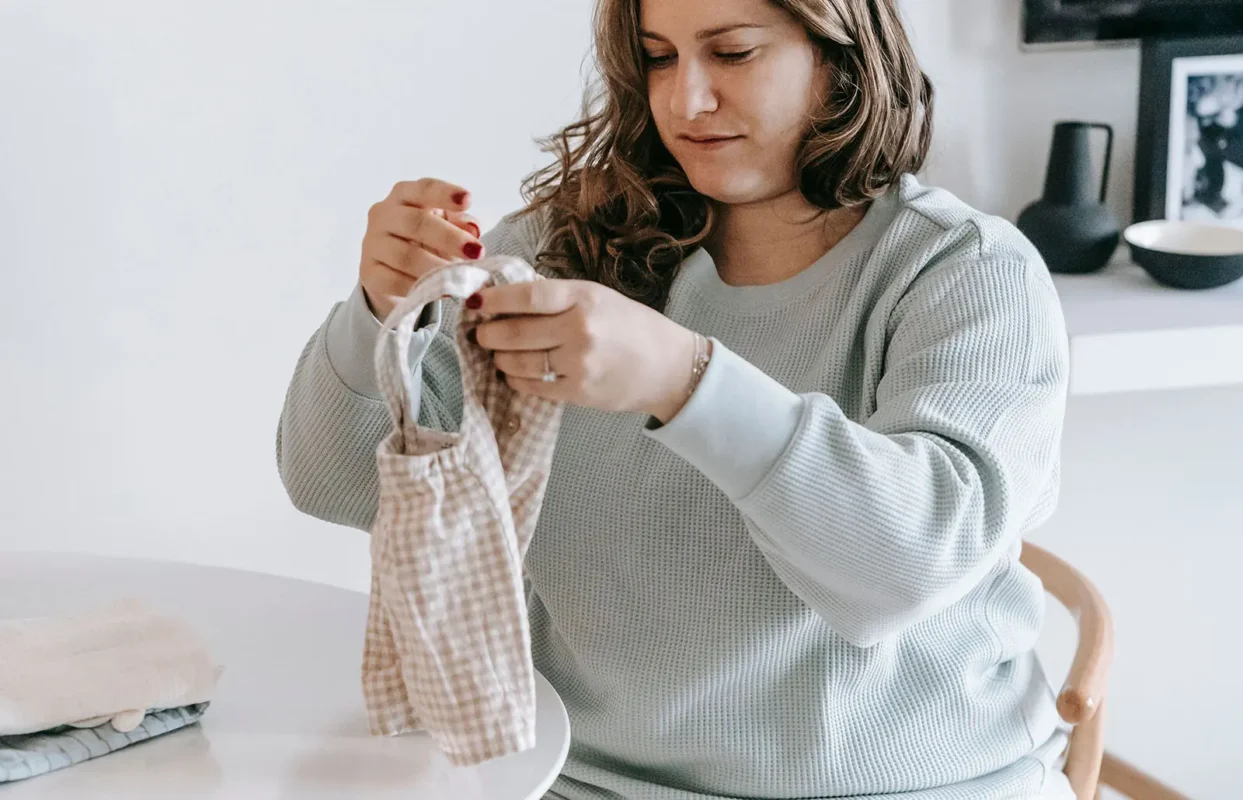
Baby clothing shrinkage is not something a manufacturer should discover after the shipment has been delivered.
Fabric can change because of its fiber composition, construction, finishing, washing, and drying conditions.
The practical approach is to:
For brands, the useful question is not simply:
“Will this fabric shrink?”
It is:
“How much will it shrink, in which direction, and will the garment still meet the approved measurements after washing?”
That is the information worth confirming before bulk production begins.

 scan wechat qrcode