20% Off for New Inquiries – Today Only!
20% Off for New Inquiries – Today Only!
Private label baby apparel packaging is usually one of the last things a new clothing brand thinks about.
The garment gets developed first. Fabric is selected, samples are made, measurements are adjusted, and colors are approved. Then, just before bulk production, someone asks for the label artwork.
That is when small problems often appear.
The logo is still being revised. The care label is missing information. The hangtag has the wrong SKU. Or the factory is ready to pack, but the custom bags have not arrived.
For new brands, private label baby apparel packaging should be discussed at the same time as the garment, not after the production plan is already fixed.
We have seen garments fully inspected and ready to ship while the order stays in the factory simply because the packaging was printed with an old logo.
The garment was fine. The packaging was the problem.
Packaging should be treated as part of production, not an afterthought.
It also does not need to be complicated. A clean label, useful hangtag, practical packaging, and accurate SKU information can look far more professional than a product buried under unnecessary boxes, tissue paper, ribbons, and inserts.
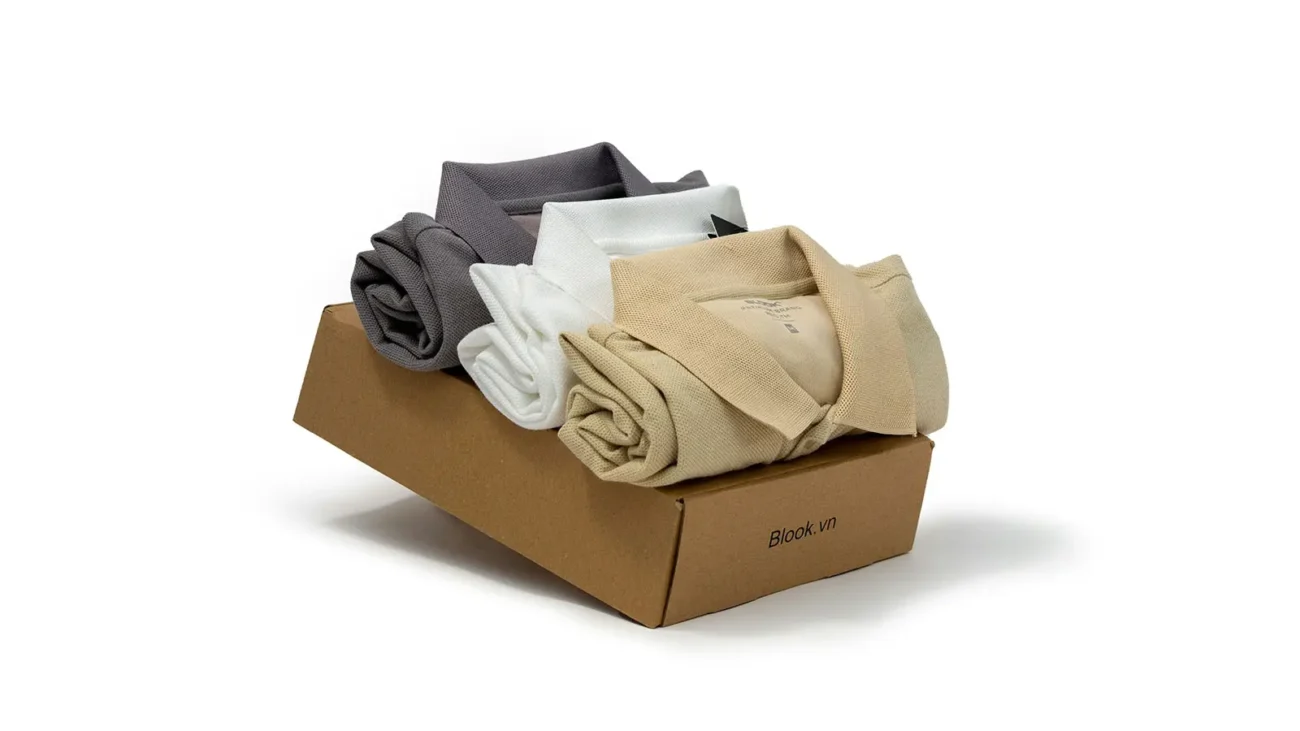
There is no single packaging setup that works for every baby clothing brand.
A small direct-to-consumer brand may need a woven label, care label, hangtag, and individual bag. A premium newborn collection might use a custom box. A brand supplying retailers may care more about barcodes, SKU identification, and carton packing.
The packaging should follow the way the product is sold.
Good private label baby apparel packaging should be developed alongside the garment rather than treated as a separate branding exercise.
A typical order may include:
Not every product needs all of these.
Take a baby bodysuit.
A woven label can look perfectly fine on a computer screen but feel too stiff or large once it is sewn into a newborn garment.
When developing baby garments, we normally check the label together with the sample. A private label baby apparel manufacturer should be able to assess whether the label size, material, and position work with the actual garment.
Changing it at the sample stage is easy. Changing it after thousands of pieces have been produced is not.
For baby apparel, comfort should come before decorative branding.
The brand label gets most of the attention because it carries the logo, but it is only one part of the labeling system.
Depending on the market, a finished garment may also require size information, fiber content, care instructions, country-of-origin information, and other details.
For U.S. textile products, brands should review the Federal Trade Commission’s textile labeling guidance. For children’s products, the U.S. Consumer Product Safety Commission is another important official source.
The factory can manufacture the label, but the brand should understand what information is required for its target market.
A hangtag gives a brand more room to communicate than a sewn label.
It might contain the logo, product name, size, barcode, material, website, or a short brand message.
But more information does not make a better hangtag.
For a clean babywear collection, something simple is often enough:
Front
Brand logo
Product name
Back
Material
Size
SKU / barcode
Website
When working with a private label baby clothing manufacturer, confirm whether hangtags, barcodes, and packaging can be coordinated through the same production process.
If required technical information is already on the care label, there is little reason to repeat everything on the hangtag.
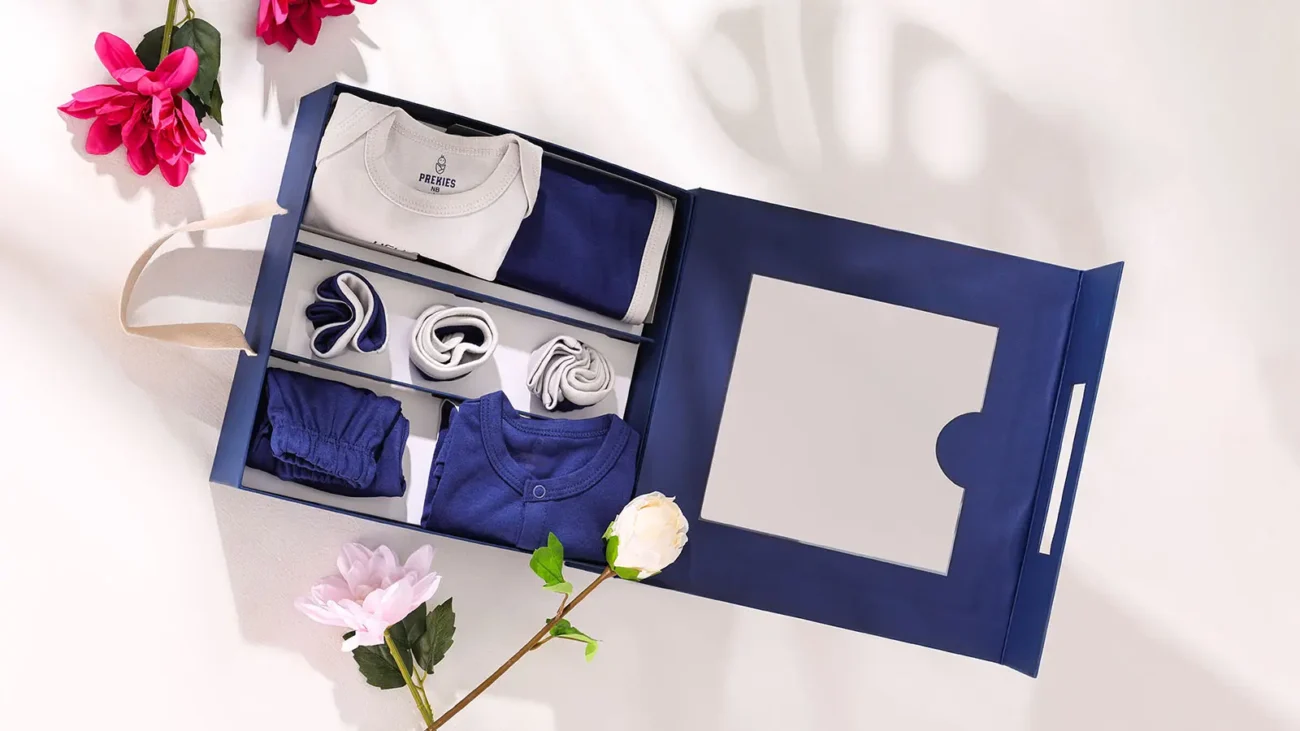
A boutique product on a retail shelf has different packaging needs from a bodysuit shipped directly to a customer.
That difference can save money.
A capable baby apparel factory can usually suggest practical packaging options based on how the garments will be stored, packed, and shipped.
The right private label baby apparel packaging should protect the garment while keeping the packing process practical.
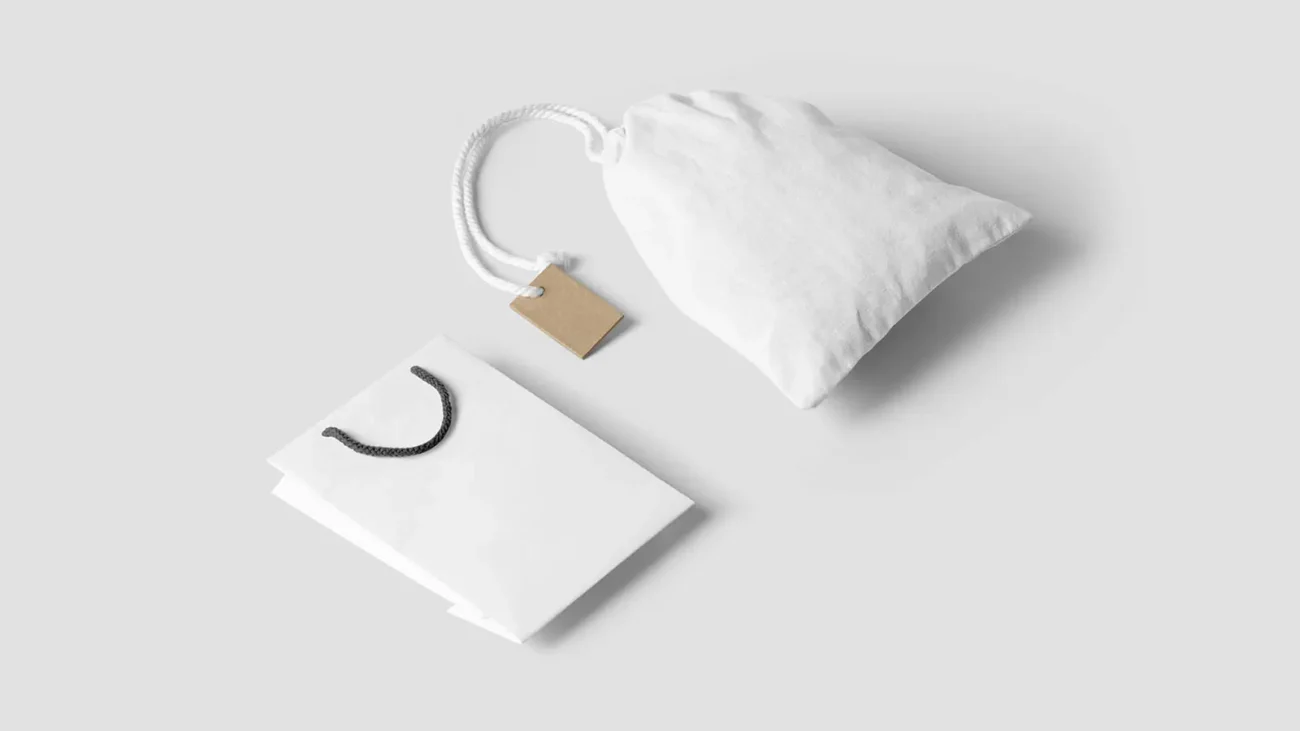
Individual bags help keep garments clean during storage and transportation. They can also make size and SKU identification easier.
For many baby clothing brands, that is enough.
There is no need to use a gift box unless the sales channel actually benefits from it.
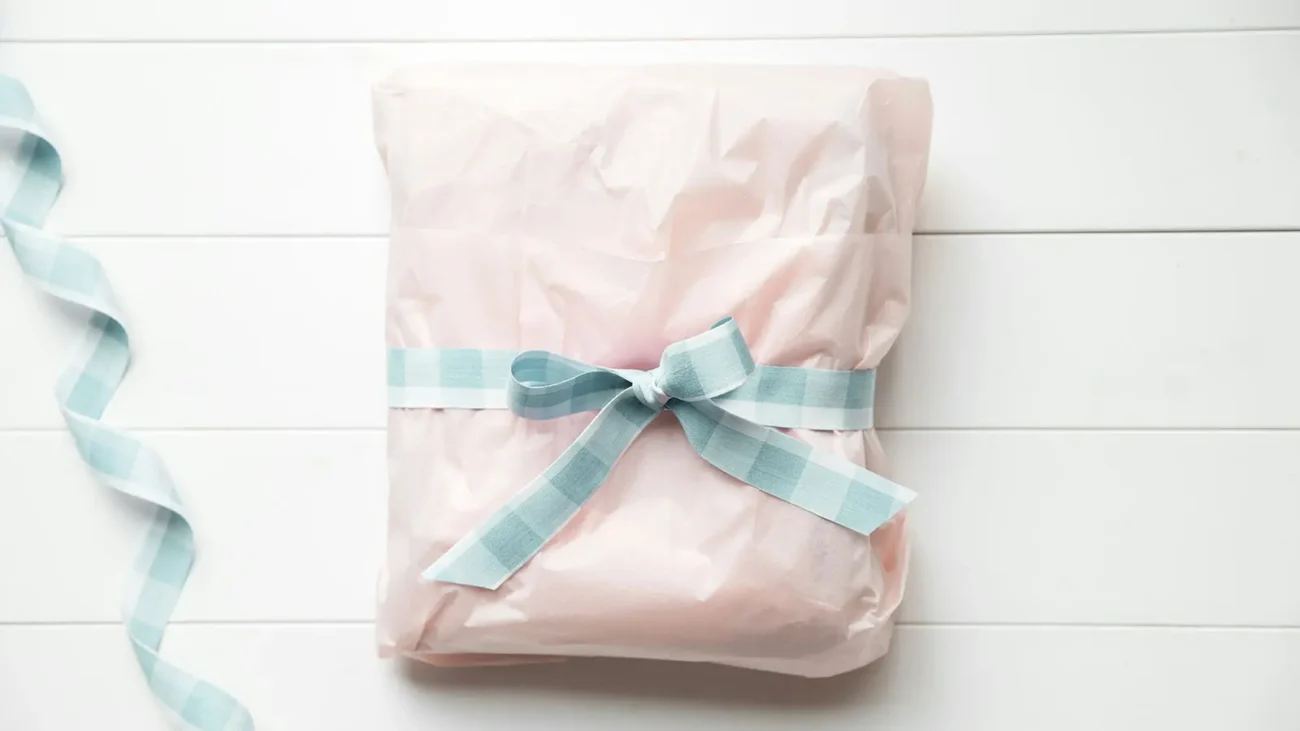
Paper packaging can create a more premium presentation, but it also takes space and can increase packing and shipping costs.
Custom boxes may make sense for gift-oriented products, but they are not automatically better for everyday babywear.
More packaging is not better packaging.
The right packaging fits the product, price point, sales channel, and customer.
One of the most frustrating situations is having a finished garment with nowhere to go.
Sewing is complete. QC is complete. Cartons are ready.
Then someone realizes the hangtags have not arrived.
Or the packaging bags have the old logo.
Or one barcode is wrong.
The garment is not the problem. The packaging is.
This is why private label baby apparel packaging should be discussed before bulk production rather than during final packing.
Once the garment sample is approved, packaging artwork should not remain open indefinitely.
The factory may need time to produce labels, hangtags, barcode stickers, packaging bags, and carton markings. Some components may come from different suppliers.
For custom baby clothing manufacturing, packaging artwork and specifications should be settled early enough for the factory to source everything before packing.
One common mistake is approving the logo artwork without checking the actual dimensions.
A label can look perfect in an artwork file and still be completely wrong once it is sewn onto a small baby garment.
Packaging mistakes are not always obvious.
A wrong logo is easy to spot. A wrong SKU can be much harder to catch.
Imagine a collection with four colors and five sizes. That already creates twenty product combinations.
If one hangtag or barcode is assigned to the wrong size, the garment itself may still look correct. The problem may only appear when the goods reach the warehouse or retail system.
Clear SKU management is an important part of private label baby apparel packaging, especially when several colors and sizes are produced together.
Before approving bulk packaging, check:
An experienced private label baby apparel manufacturer should also match packaging quantities against the final SKU breakdown before packing starts.
A five-minute artwork check can prevent a very expensive reprint.
Packaging should be ordered according to the final garment quantity and SKU breakdown.
For example, if a collection contains several sizes and colors, each SKU needs the correct number of hangtags, bags, and other packaging components.
The factory should know exactly which packaging belongs to which product.
For a baby apparel factory, having final packaging quantities before production makes it easier to organize labels, bags, tags, and cartons.
This matters even more when several similar styles have different SKUs.
Packaging is not only about bags and boxes.
The way a garment is folded can also be part of the customer’s or retailer’s specification.
A retailer may require a particular fold. A warehouse may need the barcode facing outward. A direct-to-consumer brand may want a specific presentation when the package is opened.
These instructions should be agreed before packing begins.
Otherwise, a baby clothing manufacturer may use the most practical factory packing method, only to discover that the buyer wants everything repacked.
Repacking thousands of garments is an avoidable cost.
A packing specification usually only needs to cover:
One clear reference is more useful than a long document nobody reads.
Packaging is only one part of the production process. Brands can also review CBCF’s baby clothing manufacturing capabilities to understand how product development, production, and quality control are handled.
It is easy to think of packaging as something that happens after manufacturing.
In reality, the two are connected.
If every garment needs a sewn label, hangtag, individual bag, and specific folding method, the factory needs to account for those operations when planning final packing.
A baby clothing factory that knows the requirements early can plan the workflow properly.
The relationship becomes even more important when a private label baby clothing manufacturer is handling several styles and SKUs in the same order.
Late packaging instructions can mean extra handling, extra labor, and sometimes extra days.
There is a point where packaging stops adding value.
A brand may start with a woven label and simple hangtag, then add tissue paper, stickers, thank-you cards, ribbons, and finally a custom box.
The packaging cost rises quickly without necessarily improving the customer’s experience.
For baby apparel, clean and consistent often works better than complicated.
A beautiful box cannot fix a poor garment.
A factory may accept a relatively small clothing order while packaging suppliers have much higher minimum quantities.
A brand ordering 500 garments might therefore end up buying several thousand custom bags or tags.
That creates unnecessary inventory.
For smaller brands, it is usually better to customize the packaging elements customers actually see while keeping the overall system practical.
A good baby clothing manufacturer can also help identify packaging options that better fit the order quantity.
Baby products bring additional considerations into packaging.
Loose packaging components, plastic bags, small attachments, and other materials may create safety or regulatory concerns depending on the product and market.
For U.S. products, brands should review applicable guidance from the Consumer Product Safety Commission.
For U.S. textile labeling, the Federal Trade Commission provides relevant guidance.
Brands selling internationally should check the requirements of their actual target markets rather than simply copying packaging from another order.
The practical answer is: earlier than most first-time brands expect.
A sensible sequence is:
Design → Sample → Sample approval → Packaging artwork → Artwork proof → Material production → Bulk production → Final packing
The physical packaging does not always need to arrive before sewing begins.
But the factory should know what is required and have enough time to source everything.
Before approving a large packaging order, check:
If something is wrong, fix it before production, not after thousands of pieces arrive.
For brands that need help turning an approved design into a production-ready product, CBCF’s baby clothing manufacturing service can support the process from product development through bulk production.
If the garment factory can coordinate labels, tags, bags, cartons, and other packaging components, the process may be simpler.
When choosing a private label baby apparel manufacturer, packaging coordination is worth asking about alongside sampling, fabric sourcing, and bulk production.
A reliable manufacturer should be able to discuss private label baby apparel packaging before the bulk order enters the final packing stage.
That does not mean the factory should make every design decision.
The factory can manufacture your packaging. It should not define your brand identity.
The brand should control the artwork, specifications, messaging, and final approval.
The manufacturer’s role is to turn those decisions into packaging that can actually be produced, attached, packed, and shipped efficiently.
A capable baby clothing manufacturer may be able to coordinate:
From a factory perspective, the useful question is not simply whether the packaging looks good.
We look at whether it works with the garment.
Does the label fit the neckline?
Can the hangtag be attached without damaging the fabric?
Does the packaging accommodate the folded garment?
Can the barcode be scanned easily?
Are packaging quantities aligned with the final SKU breakdown?
These practical details determine whether packaging works in the real production environment.
You do not need a 30-page packaging manual for a small babywear collection.
A clear specification can cover the essentials.
Main label: woven, brand logo, approved dimensions
Size label: confirmed size format
Care label: fiber content, care instructions, required market information
Placement: confirmed on approved sample
Size: approved dimensions
Front: logo and product name
Back: SKU, barcode, material or other required information
Type: bag / sleeve / box
Folding: approved method
Barcode: SKU-specific
Quantity: based on final order
Packing quantity: confirmed by SKU
Carton markings: style, size, quantity, destination information where required
The point is simply to have one approved reference that the factory can follow.
Private label baby apparel packaging does not need to be elaborate.
It needs to be planned.
A label that feels wrong against the skin, a care label with incorrect information, a hangtag with the wrong SKU, or packaging that arrives after the garments are finished can turn a simple order into an avoidable problem.
For custom baby clothing manufacturing, packaging should be discussed while the garment is still being developed.
Finalize the label dimensions with the sample. Confirm the care information before printing. Match hangtags and barcodes to the final SKU list. Decide how each garment should be folded and packed. Then give the factory enough time to source everything before packing.
The expensive production problems are not always complicated ones.
A missing label, wrong barcode, or late packaging bag can stop an otherwise finished order just as effectively as a fabric problem.
That is why we treat packaging as part of production, not decoration.
For brands developing their first collection, CBCF’s customization service provides information about custom baby clothing development and manufacturing.
You can also explore CBCF’s manufacturing insights for more practical information about baby apparel production.
For broader apparel manufacturing, Clothing Factory X (CFX) covers wider garment categories. Brands developing children’s collections can also explore China Kids Wear Factory, while China Baby Accessories Factory focuses on related baby products.
The best private label baby apparel packaging is rarely the most expensive option.
It is the one that arrives on time, works with the garment, carries the right information, protects the product, and makes the customer immediately recognize the brand.

 scan wechat qrcode