20% Off for New Inquiries – Today Only!
20% Off for New Inquiries – Today Only!
Custom baby apparel design often starts with a sketch, a reference garment, product photos, or a simple idea for a new collection.
But a design that looks clear to a brand may still leave many questions for a factory.
What fabric should be used? Where should a measurement start? How should a neckline be constructed? What type of snap is required? How large should the logo be? What should happen when the garment moves into bulk production?
These details matter because custom baby clothing design is not only about appearance. A production-ready product also needs clear information about materials, measurements, construction, trims, branding, and packaging.
You do not need to have every technical detail finalized before contacting a factory. An experienced baby apparel manufacturer can help with some of the development decisions.
However, the more important information you prepare in advance, the fewer unnecessary revisions you are likely to have during sampling.
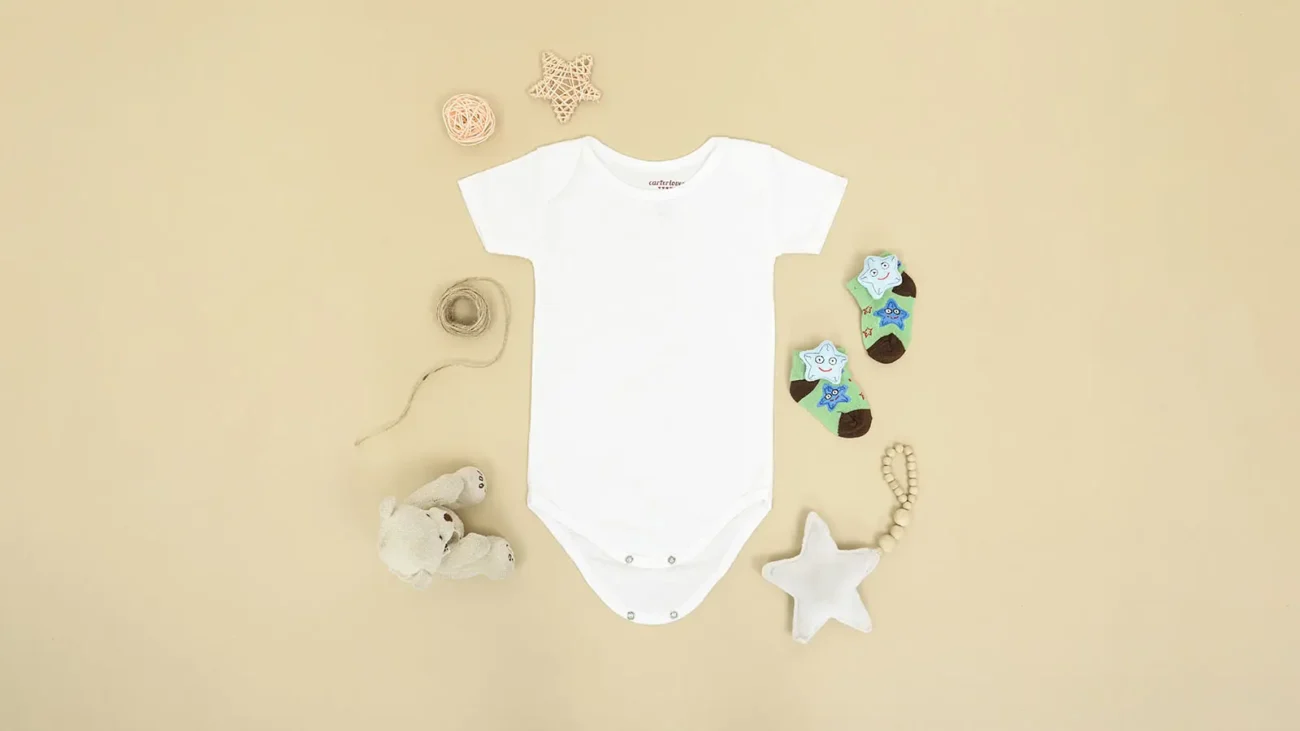
A fashion illustration is useful for communicating the overall look of a product, but it is not always enough for production.
For custom baby apparel design, a simple flat drawing showing the front and back is often more useful than a highly detailed fashion sketch.
Your drawing should make the main construction visible, including:
For a basic baby T-shirt, this may only require a simple front and back view.
A romper, sleepsuit, jacket, or layered garment will normally need more information.
Small details can create surprisingly large misunderstandings during custom baby clothing design.
For example, a baby bodysuit may have three snaps at the bottom. The main drawing may show that snaps are present, but it may not explain their spacing, size, finish, or how the binding should meet the snap area.
A small enlarged drawing can remove that uncertainty.
The same approach works for unusual collars, pockets, cuffs, ruffles, decorative stitching, and other construction details.
A few extra lines on a drawing can sometimes save an entire round of sample revisions.
Fabric is one of the areas where buyers often provide too little information.
Saying that a garment should be made from 100% cotton does not tell a factory enough to source the right material.
There are many cotton fabrics with different weights, structures, stretch, hand feel, and appearance.
If you already know the fabric, provide details such as:
A lightweight cotton jersey will behave very differently from a heavier interlock fabric, even when both are made from 100% cotton.
For custom baby clothing design, fabric selection should be connected to the actual use of the garment.
If you do not know the exact fabric specification, describe the result you want.
For example:
Soft, lightweight, breathable, and slightly stretchy for everyday baby wear.
That gives the custom baby apparel factory a practical starting point.
A summer bodysuit may need breathability and low weight, while a winter sleepsuit may require warmth and a denser construction.
A good baby apparel manufacturer can recommend suitable fabric options when the brand has clear performance requirements but does not yet have a final fabric specification.
A size such as “6–12 months” is not enough for sample development.
Different brands use different sizing systems, so the factory needs actual finished-garment measurements.
Depending on the product, these may include:
You do not necessarily need dozens of measurements for every product.
Focus on the measurements that determine the fit and proportion of the garment.
This is easy to overlook in custom baby apparel design.
For example, “body length: 40 cm” is open to interpretation.
Does the measurement start at the highest shoulder point?
Is the collar included?
Is it measured along the center back?
A simple measurement diagram can answer these questions before the first baby garment sample is made.
Once a measurement method has been agreed, use the same method for:
That makes later comparisons much easier and reduces arguments about whether a garment is actually out of tolerance.

The factory needs to know whether the garment will be produced in one size or across several sizes.
A baby collection might include:
The exact range depends on the brand and target market.
A T-shirt and a baby bodysuit do not necessarily need the same grading approach.
As sizes increase, the factory may need to adjust:
For a bodysuit, simply adding the same amount to every measurement can create poor proportions.
This is where an experienced baby apparel manufacturer can contribute useful development input.
During custom baby clothing manufacturing, grading should reflect the construction and intended fit of the actual garment rather than being treated as a simple mathematical exercise.
Trims are small components, but they can create major changes when specifications are unclear.
Your design may include:
If a particular trim is important to the product, include it in the specification.
Baby bodysuits are a good example.
You may need to define:
“Silver snaps” is usually not enough. There can be several versions with different finishes, sizes, and constructions.
For a custom baby apparel factory, these details can also affect sourcing, costing, and production time.
The factory should review whether the selected components are suitable for the garment.
A decorative component that looks attractive in a drawing may not be appropriate for a baby product.
For products sold in the United States, brands can review the U.S. Consumer Product Safety Commission’s clothing requirements when checking applicable product and safety requirements.
The manufacturer can help identify practical production concerns, but the brand remains responsible for understanding the requirements of its target market.
Color names are rarely precise enough for production.
“Beige,” “cream,” or “dusty pink” can mean different things to different people.
When color accuracy matters, provide a reference such as:
A physical reference can be especially useful when the fabric has a brushed, textured, or unusual surface.
For custom baby clothing design, the color reference should ideally be agreed before the final sample is approved.
The main fabric is not the only part that may need color matching.
You may also need to define colors for:
A small difference between the body fabric and rib can be very noticeable on a simple baby garment.
If your garment includes a logo, illustration, character, or pattern, send the original artwork whenever possible.
A screenshot from a website is rarely enough for accurate production.
The factory should know:
“Logo on left chest” still leaves several questions.
How wide should it be?
How far should it sit from the center front?
Should it be positioned relative to the garment panel or the finished garment?
These details become important during sampling.
Artwork that works well as a print may not work equally well as embroidery.
Small lettering can become difficult to reproduce. Fine lines may disappear, while large embroidered areas can change the hand feel of lightweight fabric.
If you are unsure about the best method, ask the custom baby apparel factory to review the artwork before sampling.
That is one area where an experienced baby apparel manufacturer can provide useful development input rather than simply following the design file.
Labels are easy to overlook because they are small.
But they still need to be finalized before bulk production.
Provide:
Depending on the product, you may choose a woven label, printed label, heat-transfer label, or another solution.
You should also prepare the information required for the finished garment, which may include:
The exact requirements depend on the destination market and product.
It is better to review these details before the final sample than discover during packing that the label needs to be redesigned.
This is particularly important when moving from a single baby garment sample to a larger production order.
Packaging is often discussed only after the garment has been approved.
That can create unnecessary work later.
If every garment needs an individual bag, barcode, hangtag, size sticker, or special folding method, those operations need to be considered during production planning.
Your requirements may include:
For example, a brand may require each size to be packed separately and each carton to carry a specific shipping mark.
That information should be available before bulk production starts.
A garment’s sewing cost is only one part of its finished production cost.
Labels, bags, tags, folding, inspection, and additional packing labor all contribute to the final price.
Including these requirements early gives the custom baby clothing manufacturing team a clearer basis for costing.
A tech pack is essentially a shared reference between the brand and factory.
It does not need to be unnecessarily complicated.
What matters is that the important decisions are documented in one place.
Include:
Include:
Include:
Include:
Include:
Include:
The document does not have to be perfect before you contact a custom baby apparel factory.
It needs to make clear what has already been decided and where you still need the factory’s input.
For brands without a technical design team, working with a baby apparel manufacturer that can review the tech pack can reduce misunderstandings during sample development.
This is common, particularly for startups and brands developing their first baby collection.
You may only have:
That is enough to start a development discussion.
This is one of the most useful things you can tell a factory.
For example:
The silhouette must remain the same, but fabric weight can be adjusted.
Or:
The garment needs to feel soft and lightweight. We are open to fabric recommendations.
Or:
The snap position is fixed, but we need the factory to recommend the most suitable specification.
This tells the manufacturer where it has room to suggest alternatives.
A capable baby apparel manufacturer should not simply agree with every detail and wait for problems to appear during sampling.
It should point out issues that could affect fit, construction, cost, or production.
For brands without an in-house technical team, this kind of support can be especially valuable during custom baby clothing manufacturing.
Once the design has been sent, there should be a technical discussion before the sample is made.
The factory may need to confirm:
This stage can feel slower than simply asking the factory to make a sample.
In practice, it can save time.
A short technical discussion can prevent a sample from being made with the wrong fabric, incorrect construction, or unsuitable trims.
For a custom baby apparel factory, reviewing these details before sampling also makes it easier to estimate development time and potential production costs.
Even with a clear tech pack, the first sample may not be the final version.
That is normal in product development.
Fabric can behave differently from what was expected. A neckline may need more stretch. A sleeve may feel too narrow when worn. A snap position may need adjustment after fitting.
Do not only ask:
Does it look like the picture?
Also check:
This makes sample revisions more specific and easier for the factory to act on.
The purpose of custom baby apparel design is not to produce a perfect drawing.
It is to arrive at a garment that can be made consistently, at the required quality and cost.
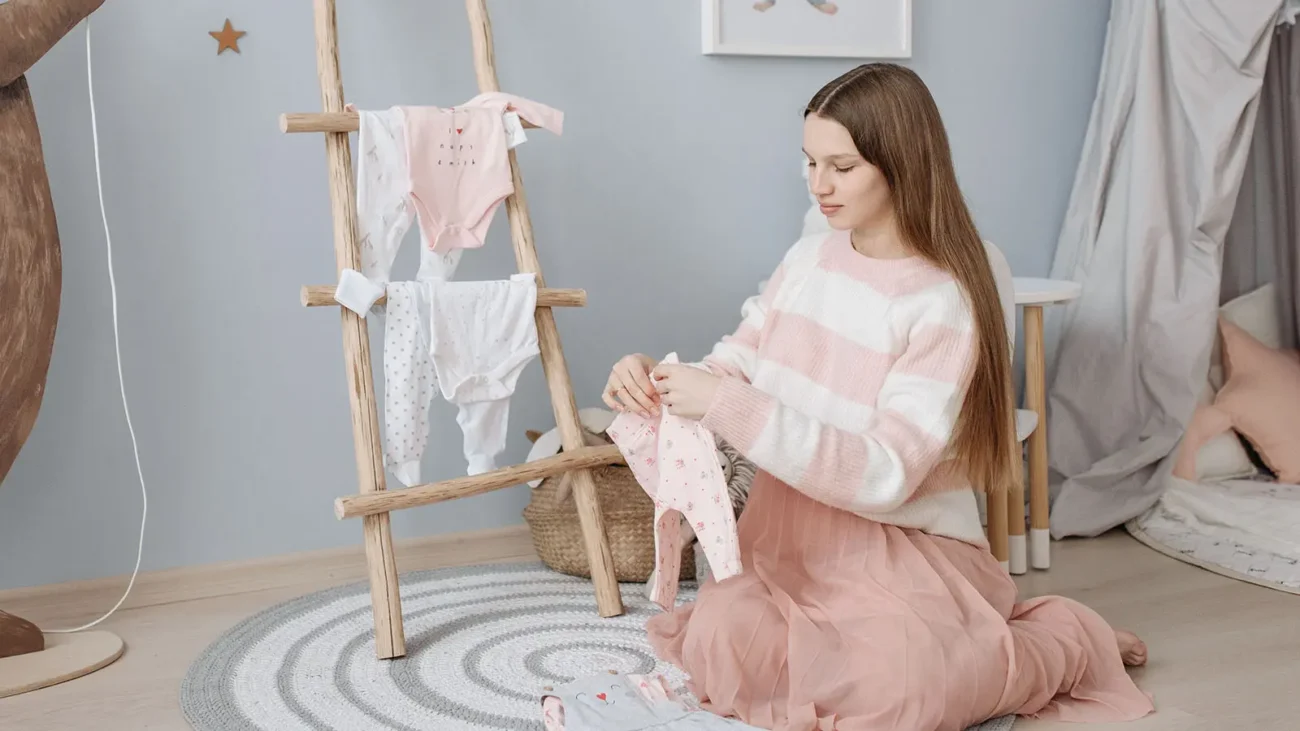
Good custom baby apparel design is not simply about creating an attractive garment.
The factory needs enough information to understand the intended fit, fabric, construction, trims, branding, and final appearance.
At the same time, brands do not need to become garment engineers before approaching a manufacturer.
Product development works best as a two-way process.
You bring the product concept, brand identity, target customer, and visual direction.
The factory brings knowledge of fabric sourcing, garment construction, production methods, costing, and manufacturing limitations.
For brands that need help turning an idea into a production-ready product, custom baby clothing manufacturing provides a starting point for discussing product development and manufacturing requirements.
You can also explore baby clothing manufacturing insights for information about materials, sampling, quality, and production.
For more information about the manufacturer’s experience and capabilities, visit CBCF’s factory information.
For broader apparel manufacturing requirements, Clothing Factory X covers additional clothing categories.
If your collection also includes products for older children, kids clothing manufacturing provides another relevant manufacturing resource.
For complementary baby products such as bibs, blankets, and other accessories, baby accessories manufacturing can support related sourcing requirements.
For broader sourcing and export coordination, Joyo Roy provides additional supply chain resources.
The objective is not to send the factory the longest possible tech pack.
It is to remove the important uncertainties before sampling, while leaving enough room for the manufacturer to suggest practical improvements.

 scan wechat qrcode