20% Off for New Inquiries – Today Only!
20% Off for New Inquiries – Today Only!
A baby romper can look perfect when it leaves the sample room.
The color matches the approved swatch, the fabric feels right, and the stitching looks clean. The buyer approves the sample and production moves forward. Then the garments reach customers, someone washes the romper for the first time, and the white collar comes back with a blue tint.
That is when a small fabric problem becomes a real business problem.
Many new brands assume that if the factory matches the fabric to a Pantone reference, the color is under control. But matching the right shade and keeping that shade stable are two different things. A navy fabric can match the approved color perfectly and still bleed during washing. A red garment can look excellent at delivery and gradually lose its depth after repeated laundering.
For brands working with a baby clothing manufacturer, this is why baby clothing colorfastness should be considered before bulk production rather than after the shipment has left the factory.
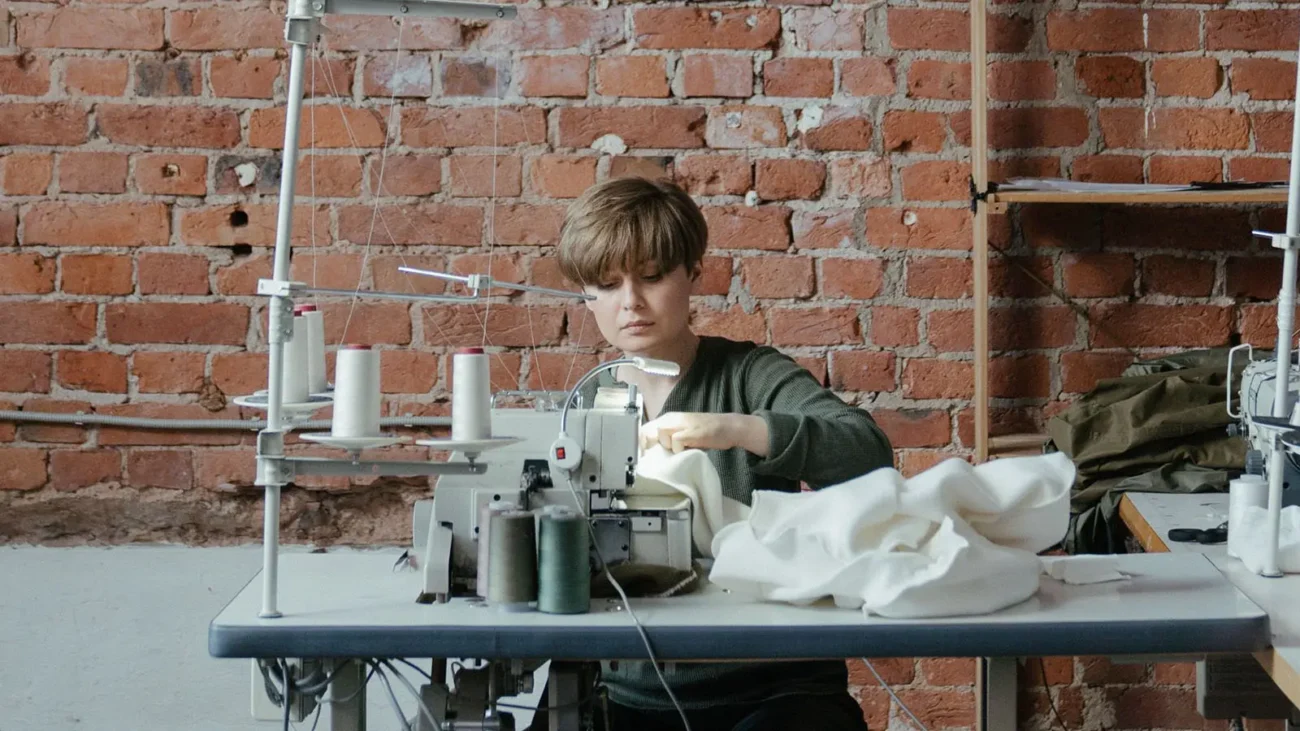
Baby clothing colorfastness describes how well a textile keeps its color when exposed to conditions such as washing, rubbing, water, perspiration, or light.
In practical terms, the question is simple: Will this garment continue to look reasonably close to the approved sample after it has been used and washed?
That sounds straightforward, but the answer depends on the fabric, dye, production process, finishing, garment construction, and intended use.
Color matching is only the starting point. During development, the factory needs to establish the correct shade. During production, it also needs to make sure that the color remains stable under the conditions the finished garment is expected to experience.
This distinction becomes especially important in custom baby clothing manufacturing, where brands often develop specific colors rather than choosing from standard fabrics already available in the market.
A Pantone card can tell you whether the shade looks right.
It cannot tell you what will happen after the garment is washed five times.
This is where some inexperienced buyers get caught. They approve the lab dip because the color is almost identical to their reference and assume the difficult part is over.
It is not.
The real question is whether the dye is properly fixed to the fiber and whether the finished material can maintain acceptable performance during normal use.
For a baby clothing factory, this distinction is important because visual color approval and performance testing solve two different problems.
Baby clothing tends to be washed frequently. Bodysuits, rompers, pajamas, T-shirts, bibs, and leggings can all go through repeated laundering, sometimes within a very short period.
That repeated exposure gives a weak dyeing process plenty of opportunities to show itself.
Imagine a brand launching a new collection with 5,000 baby rompers. The main body is navy, while the collar and cuffs are white. During development, the sample looks excellent.
The problem only appears after production.
The navy fabric releases enough dye during washing to discolor the white parts. The factory has already cut and sewn thousands of pieces, the cartons are packed, and the shipment is scheduled.
At that point, nobody wants to hear that the original problem was “just a fabric issue.”
The buyer is dealing with a finished product problem.
This is exactly where baby clothing colorfastness becomes a commercial issue rather than simply a textile specification.
Dark and highly saturated colors deserve particular attention because even relatively small changes can be easy to see.
Black, navy, burgundy, dark green, royal blue, and bright red are common examples.
This does not mean these colors should be avoided. They simply require sensible control during development and bulk production.
A navy garment that becomes slightly lighter after washing may still be acceptable in some applications. A navy garment that transfers blue dye onto a white collar is a very different situation.
That distinction is important when evaluating baby clothing colorfastness.
The goal is not necessarily to make a fabric completely immune to every possible change. The goal is to make sure its performance is appropriate for the product and the market requirements.
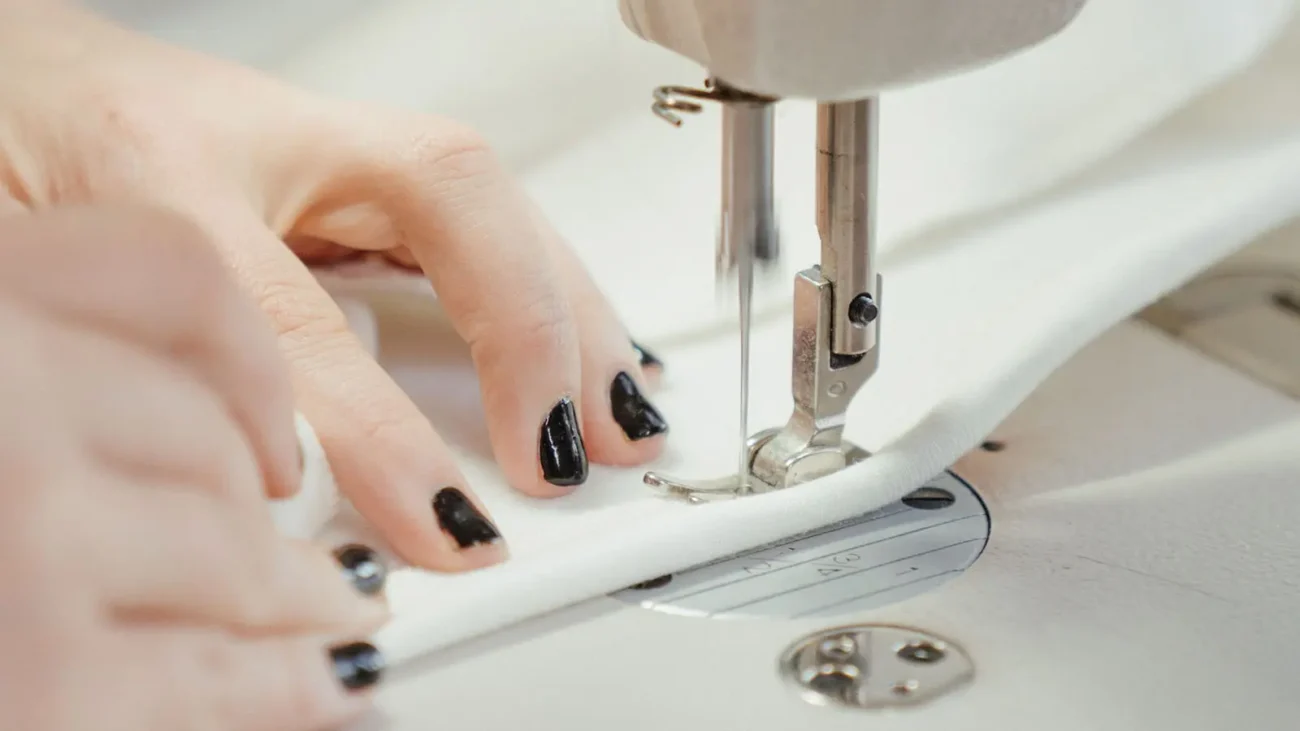
Color problems usually start long before the garment reaches the sewing line.
The choice of fiber, dye system, dyeing conditions, fixation, washing-off, and finishing can all influence the final result.
Cotton, polyester, nylon, and blended fabrics do not behave in exactly the same way during dyeing.
A dyeing method that works well for one fiber may not be appropriate for another. The factory therefore needs to consider the fiber composition before selecting the dyeing process.
This is one reason experienced baby apparel manufacturers look beyond fabric price and appearance when evaluating materials.
A fabric may be soft, attractive, and inexpensive, but that does not automatically make it a good choice for a frequently washed baby garment.
Brands working across several product categories may also need different manufacturing partners. For broader apparel programs, Clothing Factory X (CFX) focuses on wider apparel manufacturing, while specialized baby products can remain with a dedicated baby apparel manufacturer.
Temperature, pH, processing time, dye concentration, fixation, and washing-off all affect the final performance of dyed fabric.
If unfixed dye remains in the material, it may migrate when the garment is washed or rubbed.
The problem can be especially noticeable in deep colors.
A fabric can leave the dyeing facility looking excellent because visual inspection is not designed to predict every aspect of later performance.
That is why a professional baby clothing factory should not rely only on what the fabric looks like under factory lighting.
Different baby clothing colorfastness tests simulate different conditions, so there is no single test that tells the entire story.
The appropriate testing depends on the product, fabric, destination market, and expected use.
For most baby garments, washing is one of the first conditions worth considering.
The test looks at whether the original fabric changes color and whether dye transfers to another material during laundering.
This is particularly relevant to products that are expected to be washed frequently.
The important point for buyers is that washing should be considered during development, not treated as something that only matters if a complaint appears later.
Rubbing evaluates whether color transfers when the fabric comes into contact with another surface.
That may happen when a garment is worn, handled, folded, packed, or stored.
A dark garment may pass a visual inspection but still transfer color when rubbed, particularly under wet conditions.
For a baby garment, the fabric may also experience continuous contact with skin and other textiles, so rubbing performance can be relevant depending on the product.
Perspiration can affect some dyes differently from ordinary water. This matters for garments worn close to the body, such as bodysuits, pajamas, T-shirts, and underwear.
Water exposure can also come from spills or wet handling.
Light is another factor, although it may be less important for everyday baby clothing than washing and rubbing.
The right testing should therefore reflect the actual product rather than turning baby clothing colorfastness into a checklist where every possible test is ordered without considering its purpose.
One of the easiest ways to understand baby clothing colorfastness is to look at a two-color garment.
Suppose a baby romper has a dark blue body and a white collar. If the blue fabric releases excessive dye, the problem becomes visible immediately.
If the same fabric were used in a completely dark garment, the change might be much harder to notice.
This is why custom baby clothing design requires more than choosing attractive colors. The relationship between the colors also matters.
White collars, cream cuffs, light-colored rib, contrast panels, and white embroidery can all make dye transfer much easier to see.
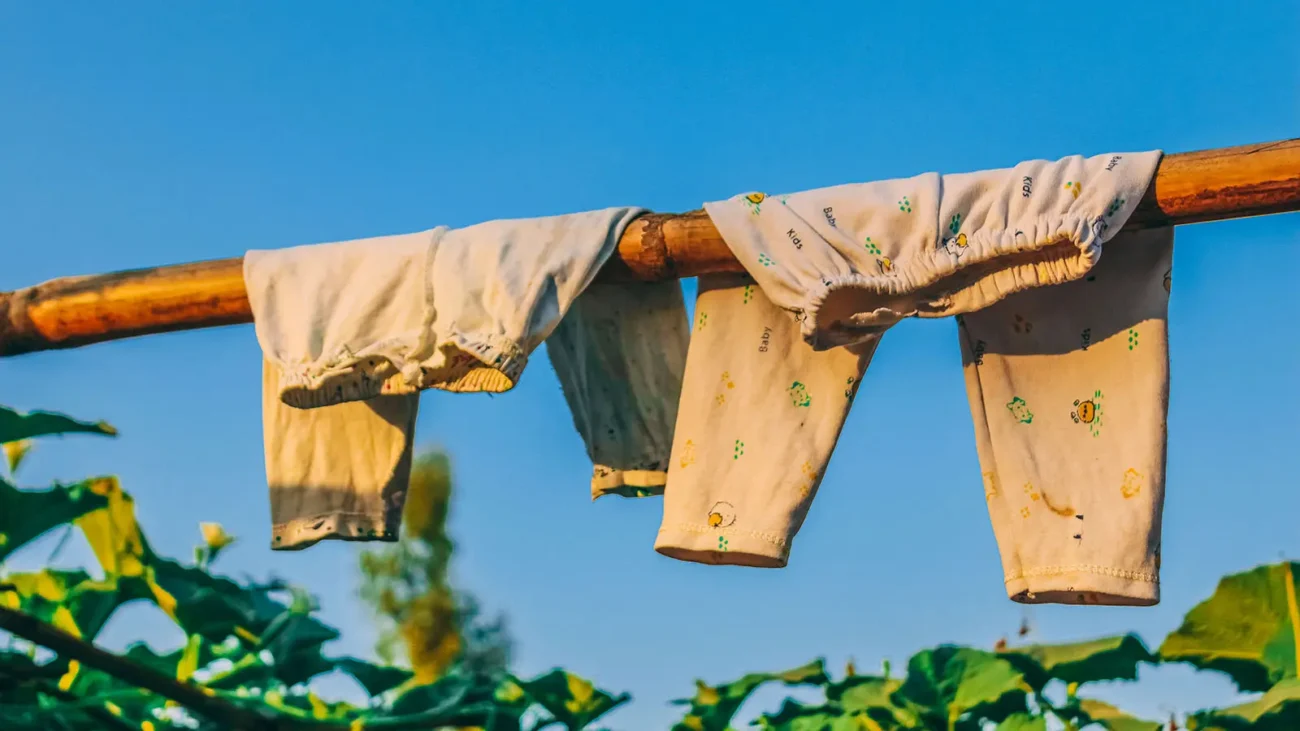
Printing creates another layer of complexity.
A base fabric may have good colorfastness while the finished print fades, cracks, loses definition, or changes appearance after washing.
This can happen with large graphics, all-over prints, multi-color artwork, or light prints placed on dark fabrics.
During custom baby clothing manufacturing, the finished garment should therefore be considered as a whole.
The question is not simply whether the fabric passed before printing. The question is whether the product the customer receives will continue to look right after normal use.
Colorfastness control starts with material development.
When a brand requests a custom color, the factory will normally need a color reference and, depending on the project, a lab dip before bulk dyeing.
The lab dip allows the buyer and factory to agree on the shade.
That is useful, but it should not be confused with performance testing.
The lab dip answers:
Does the color look right?
Colorfastness testing addresses another question:
Does the color perform properly under the required conditions?
Keeping these two decisions separate makes the approval process much clearer.
Another common mistake is assuming that an approved lab dip guarantees identical bulk fabric.
Bulk production may involve different dye lots or production batches. Even relatively small shade differences can become obvious when garments from different batches are displayed next to each other.
A capable custom baby apparel factory should therefore monitor bulk fabric before cutting, rather than assuming that approval of the first sample is enough.
This is particularly important for larger orders.
For brands that also source accessories such as bibs, blankets, or other baby textile products, China Baby Accessories Factory (CBAF) provides a separate specialized manufacturing resource. Keeping product categories organized across specialized suppliers can make quality control easier to manage.
The earlier a problem is found, the easier it usually is to deal with.
During product development, a factory can still change the fabric, adjust the color, or investigate another dyeing process.
Before bulk cutting, there is still an opportunity to stop unsuitable material from entering production.
Once thousands of garments have been sewn, the situation changes completely.
Consider a brand that has already produced 10,000 baby bodysuits.
The garments are sewn, packed, and ready for shipment when a washing test shows excessive dye transfer.
The problem is no longer limited to the fabric supplier.
The buyer may now face reinspection, rework, replacement garments, delayed delivery, additional freight costs, or customer complaints.
A problem that might have taken a few days to solve during development can become a problem that affects an entire order.
That is why experienced buyers tend to ask about baby clothing colorfastness before approving bulk production.
For brands developing children’s apparel beyond baby sizes, China Kids Wear Factory (CKWF) provides a related manufacturing resource focused on kidswear. This kind of specialized production structure can be useful when a brand develops collections across different age groups.
You do not need to be a textile chemist to have a useful conversation with a supplier.
Ask where the fabric comes from and whether the bulk material will come from the same approved source as the sample.
For custom colors, ask how the lab dip is approved and how the factory manages different dye lots.
It is also reasonable to ask which colorfastness tests are relevant to the product, what standard is being followed, and whether testing has been carried out on the actual production material.
The quality of the answers can tell you a lot.
A factory that can explain why a particular test is relevant and how the result is controlled is usually easier to work with than a supplier that simply says the fabric is “high quality.”
Visual inspection still matters.
A factory can identify obvious shade differences, uneven dyeing, streaks, spots, and other visible problems before production.
But visual inspection has an obvious limitation: it tells you what the fabric looks like now, not necessarily how it will behave after several washes.
That is why objective testing is valuable when the product, market, or material calls for it.
For brands selling into regulated markets, baby clothing colorfastness should also be considered alongside the wider product safety and labeling requirements that apply to children’s clothing.
The U.S. Consumer Product Safety Commission provides guidance on applicable clothing requirements in the United States.
Good colorfastness does not automatically make a garment a good product.
A fabric can retain its color and still have problems with shrinkage, pilling, seam construction, dimensional stability, print durability, or trims.
For baby products, these factors work together.
A reliable baby apparel manufacturer should look at the finished garment as a complete product rather than treating every quality issue separately.
This is particularly important when a design combines several fabrics, trims, prints, and colors.
For brands managing a wider supply chain, Joyo Roy provides another resource for supply chain and export coordination, which can become relevant when multiple product categories or factories need to be managed together.
There is a simple reason experienced manufacturers prefer to identify color problems before bulk production:
The earlier you find the problem, the more choices you have.
Before production, the factory can change the fabric, adjust the dyeing process, modify the shade, or test another material.
After production, those choices become much more expensive.
This is especially important for smaller brands, where a single rejected order can put considerable pressure on cash flow and launch schedules.
A few days spent checking a fabric can be far less painful than explaining to customers why a new baby garment did not survive its first few washes.
Baby clothing colorfastness may not be the first thing a buyer thinks about when developing a new collection, but it can have a surprisingly large effect on the final product.
The right color on a sample is only the beginning. The material also needs to remain stable enough for the way the garment will actually be worn, washed, rubbed, and handled.
For brands developing new collections, discussing baby clothing colorfastness with the factory before bulk production is a practical part of product development.
A capable baby apparel manufacturer should be able to discuss the fabric, color development, relevant testing, and bulk production controls without making the subject unnecessarily complicated.
For brands working on custom baby clothing manufacturing, color development can be considered alongside fabric selection, sampling, testing, and production planning from the beginning.
You can also explore baby clothing manufacturing insights for related information about materials, quality control, and product development.
For more information about China Baby Clothing Factory, including its manufacturing capabilities and product development support, visit the company’s main website.
The goal is not simply to make a baby garment look right when it leaves the factory.
The real goal is for it to still look right after it has gone home with the customer.

 scan wechat qrcode