20% Off for New Inquiries – Today Only!
20% Off for New Inquiries – Today Only!
Baby clothing factory capacity is easy to misunderstand when you are comparing suppliers.
A factory may tell you it can produce 300,000 or 500,000 pieces a month. On paper, that sounds more than enough for most brands. But that number may represent the total output of the factory under ideal conditions, not the capacity available for your order.
For a buyer, the more useful question is much simpler:
Can this factory produce my styles, in my required quantity, during the weeks I need, without letting quality or delivery dates slip?
That becomes particularly important when a brand moves from small trial orders to regular bulk production. A factory that handles 1,000 pieces comfortably may need a very different production plan when the order becomes 10,000 or 30,000 pieces.
Before scaling with a supplier, there are seven areas worth checking.
The first thing to clarify is the difference between total factory capacity and capacity that is actually available.
A baby clothing factory may have several production lines, but those lines may already be committed to existing customers.
For example, a supplier might have a reported monthly capacity of 300,000 pieces. If 250,000 pieces are already scheduled, the number that matters to you is not 300,000.
It is the remaining capacity during your production window.
For international brands, baby clothing factory capacity should also be considered against expected order growth. If you expect your first order to be 2,000 pieces but believe it could reach 10,000 pieces within a year, discuss that before production starts.
A factory may be able to handle the first order easily but have difficulty accommodating the larger volume later.
Instead of asking only:
What is your monthly production capacity?
Ask more specific questions:
These questions usually produce much more useful answers.
For a growing brand, baby clothing factory capacity should be reviewed before confirming the production schedule, especially when several styles will run at the same time.
Capacity is also product-specific.
A basic baby T-shirt can move through a production line relatively quickly. A romper with snaps, binding, elastic, several panels, and decorative details requires more operations.
The same factory may therefore produce very different quantities of different products within the same month.
That is why a realistic capacity discussion should be based on your actual styles rather than a factory-wide number.
Experience with baby garments can make a noticeable difference during production.
An established baby clothing manufacturer will usually know which operations are likely to slow down a particular style and where quality problems tend to appear.
This is especially useful when your products include details such as:
Suppose you are developing a baby romper with a snap closure and elastic leg openings.
A factory that already produces similar rompers has historical production data and practical experience to draw from. Its production manager can usually make a better estimate of labor time and line output than a factory seeing the construction for the first time.
This is one reason buyers should look beyond the phrase “baby clothing manufacturer” on a supplier profile.
Ask what the factory actually produces every month.
A baby clothing manufacturer with regular experience in these products can usually identify production risks earlier than a supplier that only occasionally handles baby garments.
In baby clothing manufacturing, a small design change can add several production operations.
For example:
| Product | Typical Production Consideration |
|---|---|
| Baby T-shirt | Relatively simple construction |
| Bodysuit | Additional snap and binding operations |
| Romper | More assembly and finishing |
| Hooded jacket | More panels and sewing operations |
| Multi-layer sleepwear | More construction and finishing steps |
These differences matter when estimating baby clothing factory capacity.
A factory may have enough overall capacity for your order but still need additional time because your particular style is more labor-intensive.
A supplier may show photographs of a large workshop filled with sewing machines.
That is useful, but it does not tell you much about actual production efficiency.
What matters is how those machines work together.

Every garment has operations that take longer than others.
One style might move quickly through sewing but slow down at snap attachment. Another might require extra time during binding or finishing.
If one operation cannot keep up with the others, work begins to accumulate around that point.
A useful question for the factory’s production manager is:
Which operation is the bottleneck for this style?
An experienced production team should have a practical answer.
The actual baby clothing factory capacity for a specific product depends on equipment, operators, line balance, and the time required for each operation.
A factory with 500 sewing machines is not automatically twice as productive as one with 250.
Some machines may already be assigned to other orders. Others may be specialized for particular operations.
The important question is whether the factory has the equipment and operators needed for your styles at the time your order is scheduled.
A capable baby apparel manufacturer should be able to explain how your products fit into its existing production setup.
Garment production is still highly dependent on skilled operators and experienced supervisors.
Adding more workers does not automatically increase output. If the production line is poorly balanced, extra workers can simply create more work-in-progress without solving the real bottleneck.
Before scaling up, find out:
These details may seem operational, but they directly affect delivery.
For a growing brand, a reliable baby clothing manufacturer needs more than enough sewing operators. It needs production management that can keep materials, workers, quality checks, and delivery schedules aligned.
Production problems rarely stay inside the factory.
If a production delay is discovered late, the buyer may only hear about it when the shipment date is already approaching.
A well-managed factory should be able to communicate problems early and explain what is being done about them.
That is often a better sign of manufacturing maturity than a large capacity figure.
Factory capacity changes throughout the year.
A supplier that has plenty of room in one month may be almost fully booked during its busiest production period.
This matters for brands working around seasonal launches or major promotional campaigns.
Before confirming a large order, ask:
Peak-season planning can have a direct effect on baby clothing factory capacity.
It is also worth asking what happens when several customers need delivery around the same time.
A realistic answer may involve reserving production capacity several weeks or months in advance.
That is much more useful than being told that the factory can “handle any quantity.”
Overtime can help a factory deal with a temporary increase in demand.
But if a supplier regularly depends on overtime to meet normal delivery schedules, that may indicate that its regular production capacity is already stretched.
For long-term orders, stable scheduling is usually preferable to relying on last-minute overtime.
This is where many capacity discussions become too focused on quantity.
A factory may be physically capable of producing 20,000 pieces.
The more important question is whether it can produce 20,000 pieces that match the approved sample.
Imagine that a neckline is consistently 0.5 cm wider than the approved measurement.
If the problem is found during sampling, it is easy to correct.
If it is repeated across thousands of finished garments, the cost becomes much higher.
You may need:
Good baby clothing manufacturing therefore requires production controls that work at scale.
Reliable baby clothing manufacturing means maintaining the same attention to measurements, stitching, materials, and finishing whether the order is 1,000 pieces or 20,000.
In large-scale baby clothing manufacturing, even a small production deviation can become a significant quality issue when it is repeated across thousands of pieces.
Ask where inspections take place.
Depending on the product, checks may happen during:
Also ask what happens when a problem is found.
A useful factory response should explain how defective pieces are identified, separated, corrected, and prevented from recurring.
Material safety is another area worth checking before bulk production. For brands selling in the United States, the U.S. Consumer Product Safety Commission’s clothing requirements provide guidance on applicable requirements for clothing, including children’s apparel.
For brands specifying certified textiles, OEKO-TEX STANDARD 100 is another useful reference. The standard covers testing textiles and their components for harmful substances, including materials and certain finished-product components.
The approved sample should not become irrelevant once bulk production starts.
Measurements, fabric, color, construction, trims, labels, and finishing should all remain consistent with the approved specifications.
A professional baby clothing factory should have a clear reference for production workers and quality inspectors.
One of the best ways to evaluate a supplier is to give it a manageable production order first.
You do not need to commit to a very large quantity before you know how the factory actually performs.
A trial production order can tell you much more than a supplier presentation.
Look at:
Testing a supplier with a smaller order gives you a practical view of its real baby clothing factory capacity.
If the factory performs well, increasing the next order becomes a much more informed decision.
A useful question before scaling is:
If our order doubles next season, how would you handle it?
The factory should be able to discuss production lines, labor, material planning, and scheduling.
A capable baby apparel manufacturer should not need to guess at the answer.
It should have a reasonable production plan for handling growth.
For baby sleepwear, there is also a separate compliance consideration in the U.S. The CPSC’s children’s sleepwear guidance explains the applicable flammability requirements and testing considerations for children’s sleepwear.
There is no single production number that makes a factory suitable for every brand.
A company ordering 500 pieces per style has very different needs from a brand ordering 50,000.
Instead of comparing suppliers only by their stated monthly output, look at the factors behind that number.
| Area | What to Check |
|---|---|
| Available capacity | How much production space is actually available? |
| Product experience | Does the factory make similar baby garments? |
| Production lines | Which line will handle your products? |
| Equipment | Are the required machines available? |
| Labor | Are trained operators available? |
| Management | Who monitors production and solves bottlenecks? |
| Peak season | How far ahead must capacity be reserved? |
| Quality | Can bulk production match the approved sample? |
| Lead time | Is the promised schedule realistic? |
| Scaling | Can production increase when your orders grow? |
Baby clothing factory capacity is not just the number printed on a supplier profile.
For an international brand, usable capacity means being able to secure production space, source the required materials, run the correct production line, maintain quality, and ship the order on time.
For buyers, practical baby clothing factory capacity is ultimately measured by consistent output, stable quality, and reliable delivery rather than the maximum number a factory can produce under ideal conditions.
That is why it is worth asking detailed questions before scaling.
A factory with a slightly lower stated output but strong production management may be a better long-term partner than a factory advertising a huge capacity figure with little explanation behind it.
For brands developing new products, custom baby clothing manufacturing can help address product specifications, fabric selection, sampling, and production requirements before bulk manufacturing.
You can also review baby clothing manufacturing insights for practical information about product development, materials, quality, and manufacturing.
For more information about the factory and its manufacturing capabilities, visit CBCF’s factory information.
For broader apparel production requirements, Clothing Factory X covers additional apparel manufacturing categories.
If your product range includes clothing for older children, kids clothing manufacturing is another relevant resource.
For baby accessories such as bibs, blankets, and related products, baby accessories manufacturing can support complementary sourcing needs.
For broader sourcing and export coordination, Joyo Roy provides additional supply chain resources.
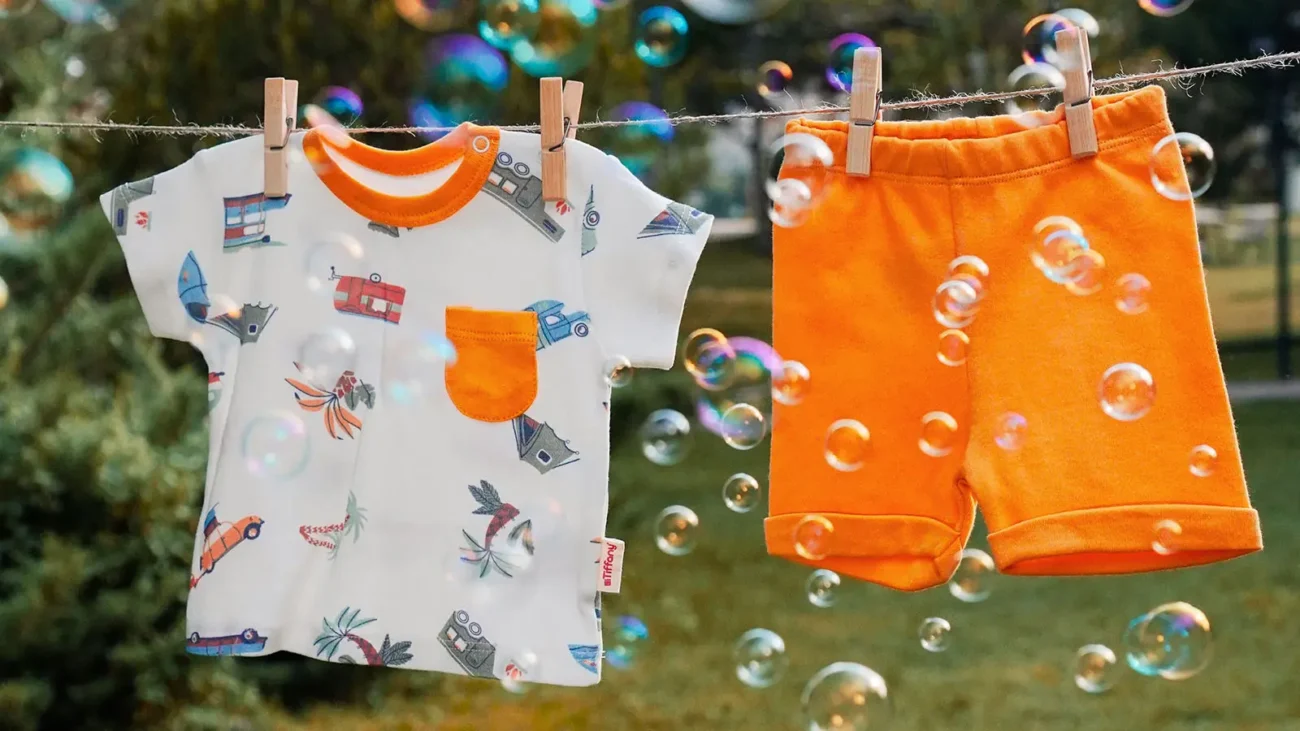
Don’t judge a factory by its biggest production number.
Ask how much capacity is actually available for your order, whether the factory has experience with your products, how the production line is organized, and what happens when your order gets bigger.
Most importantly, look at what happens during real production.
If a supplier can consistently deliver the approved product, meet the agreed schedule, communicate problems early, and increase output without losing control of quality, that is much stronger evidence than a capacity figure on a sales sheet.
That is the kind of baby clothing factory capacity that matters when a brand is ready to scale.

 scan wechat qrcode